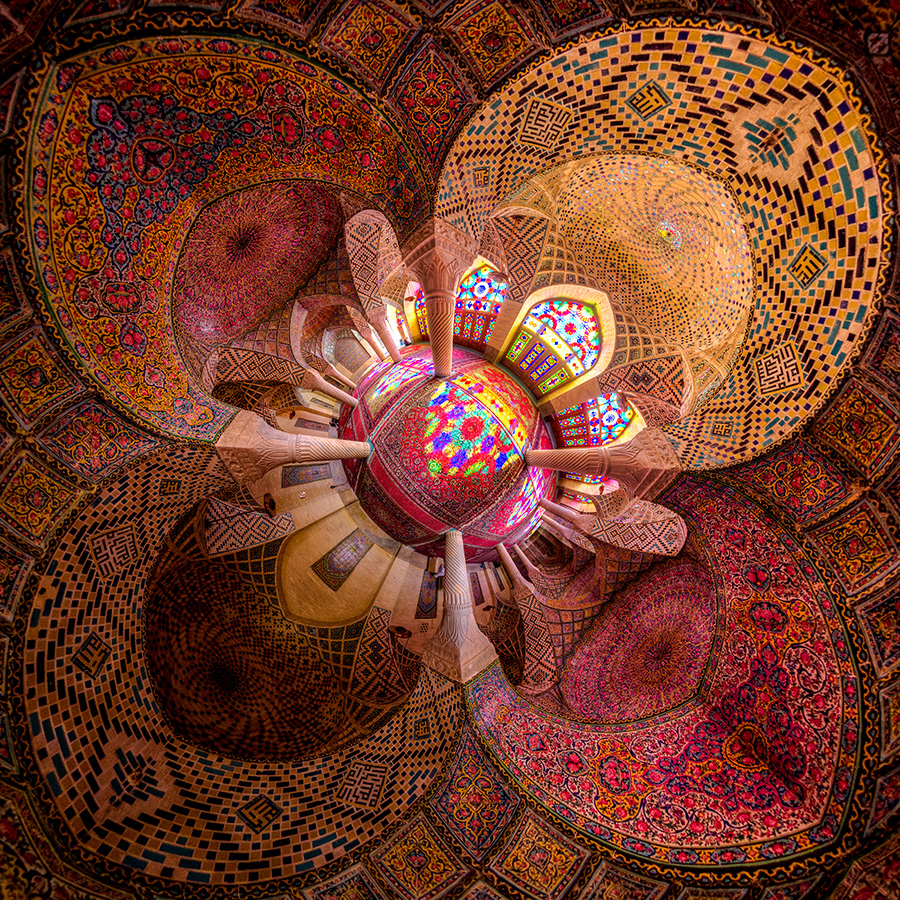
In fall and winter seasons, when sunlight shines through the colorful glasses, it presents an exemplary beauty to the interior of the bedchamber, making this mosque outstandingly aesthetical among other mosques of Iran. The tiling and paintings of the bedchambers are of exceptional beauty as well.
I have seen stained glass work in many architectural buildings, however the stained glass in the Nasir ol Mulk Mosque is exceptional.
You are invited to see some photographs of this mosque:


From the start of dawn the mosque is filled with colour and light. Sun shines through the glass and fills the inside, the Persian rugs, the ceiling and wall tiles with patterns and colours.
I am so amazed at how the architect was able to combine so many things to build such an exquisite mosque.
I went to this mosque on a winter morning, and waited for the light that moves gently from the right hand side of the mosque towards the left, to fall exactly in the center so that my photograph could be completely symmetrical.


for those who are interested in architecture and archaeologyMore information about Nasir al-Mulk
A brief introduction to Islamic architecture of Iran
The Islamic period is a part of Persian history that starts after the Sassanid period, with the coming of the Muslims, till now.
This important part of history has a long age, more than 1 millennium, and is divided into different dynasties. Every period has its unique and own characteristics, like architecture, economic system, social classifications, etc.
Now, we are going to have a glance at the Qajar dynasty, because the place that we are speaking about was built in the Qajar period.
Qajar architecture
Every type of architecture in each period has some unique elements, but it borrows some elements from previous periods. Therefore, the architecture of the Qajar period owes to Safavid art and architecture.
The Qajar art & architecture have not the magnificence and beauty of the previous period. For example, some cities like Isfahan, Tabriz and Qazvin were extended and developed in the Safavid period with grand and unique mosques, schools, caravanserais and complexes. But in the Qajar period, some cities like Tehran, Shiraz, Yazd and Kashan were raised by building mosques, baths and palaces.
One of the most important monuments of this period is the Nasir al-Mulk Mosque, which was built in Shiraz by one of the dignitaries, named Nasir al-Mulk. This mosque has several names, like the Pink Mosque, because of the usage of pink and yellow flowers in the tiles. But the thing that makes this place more important is the technique of the usage of glasses and the play with lights. Another part of this mosque that attracts most photographers to take photos is the harmony of using the columns inside it, and this element is inspired by the Jam-e Mosque of Shiraz.
Plan of the Nasir al-Mulk Mosque
All of the mosques around the Islamic world are very similar to each other, but they are different from each other. This difference is obvious in their plans. For example, in Iran, most mosques in every period have 4 loggias, some others have 2 loggias, and in rare cases we see even 1 loggia.
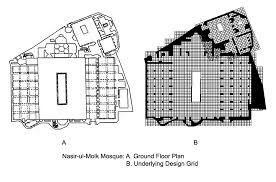
The Nasir al-Mulk Mosque has 2 loggias, in the north and south, and in one of them there are 2 minarets, and 2 halls in the west and east. Some arts are very significant in this mosque, like the tiling, the paintings on the roofs of the loggias, the colorful glasses, the plasterworks, the turnery of the columns and the beautiful decorations of the mihrab.
By the way, if you like my photography of the Pink Mosque, you can buy an NFT of this mosque, which is available as 50 limited editions here: makersplace.com/gravity/pink-mosque-2013-3-of-50
The archaeological and architectural information was written by a guest contributor.
Your comments are welcome.